Blog
How to Plan a Funeral on a Budget: Complete Guide to Saving Money Without Sacrificing Dignity


By Joe.
How to Plan a Funeral on a Budget | Affordable Funeral Guide | Casket Emporium
Learn how to plan a funeral on a budget without sacrificing dignity. Compare funeral costs, casket prices, services, burial options, and ways to save money during funeral planning.
How to Plan a Funeral on a Budget
Planning a funeral can be emotionally difficult, and the financial decisions can add even more stress. Families may need to choose a funeral home, casket, cemetery, flowers, transportation, obituary, burial or cremation arrangements, and many other services in a very short amount of time.
The good news is that a meaningful funeral does not have to be the most expensive funeral.
Families have the right to compare prices, decline services they do not want, purchase a casket from another retailer, and ask for itemized pricing before agreeing to funeral arrangements.
If you’re searching for how to plan a funeral on a budget, this guide explains practical ways to reduce funeral expenses while still creating a dignified and meaningful tribute to your loved one.
At Casket Emporium, we believe families deserve transparent information and choices during one of life’s most difficult moments.
How Much Does a Funeral Cost?
The total cost of a funeral varies significantly based on the services and merchandise selected.
Common funeral expenses may include:
- Funeral home basic services fee
- Transportation of the deceased
- Embalming
- Preparation of the deceased
- Viewing or visitation
- Funeral ceremony
- Hearse
- Cemetery expenses
- Burial vault or grave liner
- Casket
- Flowers
- Obituary notices
- Death certificates
- Clergy or officiant
- Memorial programs
- Headstone or monument
One of the best ways to control funeral expenses is to examine each cost individually rather than automatically purchasing a package.
The Federal Trade Commission’s Funeral Rule allows consumers to choose individual funeral goods and services instead of requiring them to purchase a package containing unwanted items.
Official FTC Funeral Planning Guide:
https://consumer.ftc.gov/articles/shopping-funeral-services
Step 1: Decide on Your Funeral Budget Before Making Arrangements
Before selecting funeral merchandise or services, determine how much your family can comfortably spend.
A funeral budget might include separate amounts for:
- Funeral home services
- Casket
- Cemetery
- Flowers
- Transportation
- Memorial service
- Obituary
- Food or reception
- Headstone
Having a spending limit before entering the funeral home can help prevent emotional overspending.
The goal should be creating a meaningful tribute—not purchasing the most expensive option available.
Step 2: Compare Several Funeral Homes
Funeral prices can vary considerably between providers.
Before selecting a funeral home, call multiple providers and ask about:
- Basic service fees
- Embalming
- Viewing
- Funeral ceremony
- Transportation
- Graveside services
- Direct burial
- Cremation
- Casket prices
The FTC recommends comparing prices from multiple funeral homes whenever possible.
You also have the right to receive pricing information over the phone.
Official FTC resource:
https://consumer.ftc.gov/consumer-alerts/2024/11/calling-funeral-home-about-prices-services
Step 3: Ask for the General Price List
One of the most important documents in funeral planning is the General Price List, often called the GPL.
The GPL lists the funeral home’s prices for goods and services.
Use it to compare:
- Basic services
- Transportation
- Embalming
- Viewing
- Ceremonies
- Burial
- Cremation
- Other services
Don’t be afraid to ask questions about anything you don’t understand.
You are making an important financial decision and deserve clear information.
Step 4: Don’t Assume You Need a Funeral Package
Many funeral homes offer packages.
Packages can be convenient, but they may contain services your family doesn’t need.
Under the FTC Funeral Rule, consumers generally have the right to purchase individual funeral goods and services instead of accepting a package.
For example, you may decide you don’t need:
- Limousine service
- Multiple days of visitation
- Expensive burial clothing
- Certain printed materials
- Additional vehicles
- Certain preparation services
Ask for itemized prices before deciding.
FTC Funeral Costs and Pricing Checklist:
https://consumer.ftc.gov/articles/funeral-costs-pricing-checklist
Step 5: Compare Casket Prices Before Buying
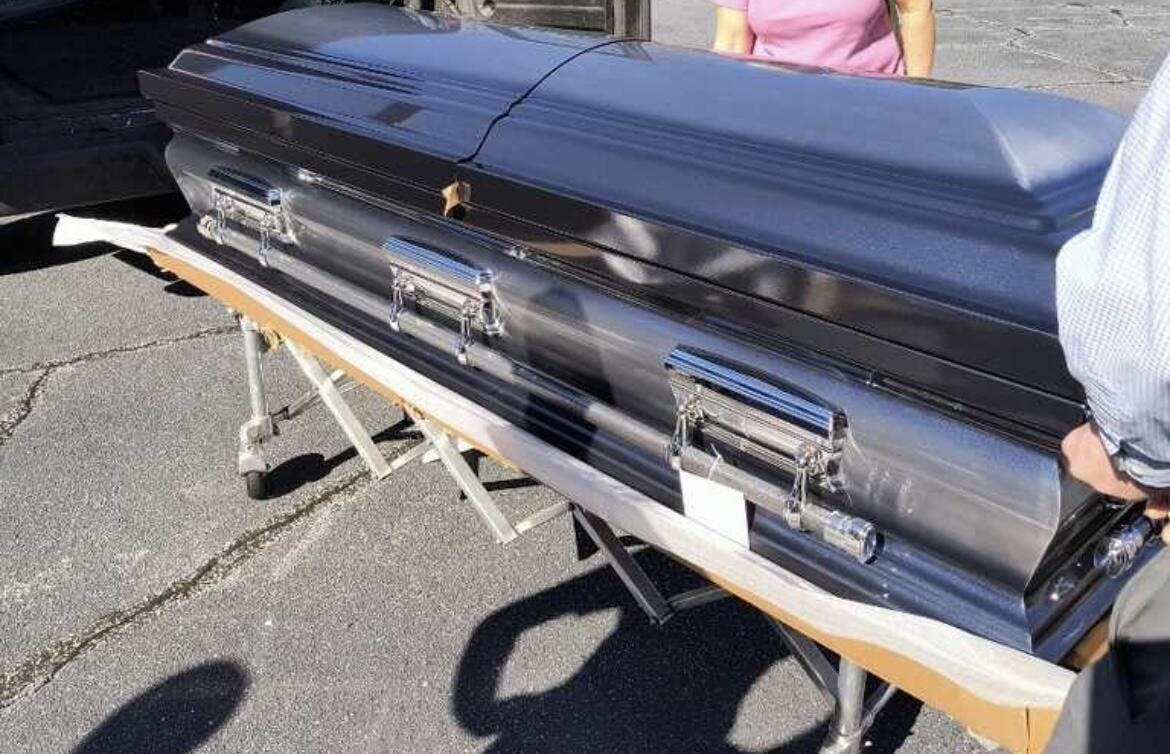
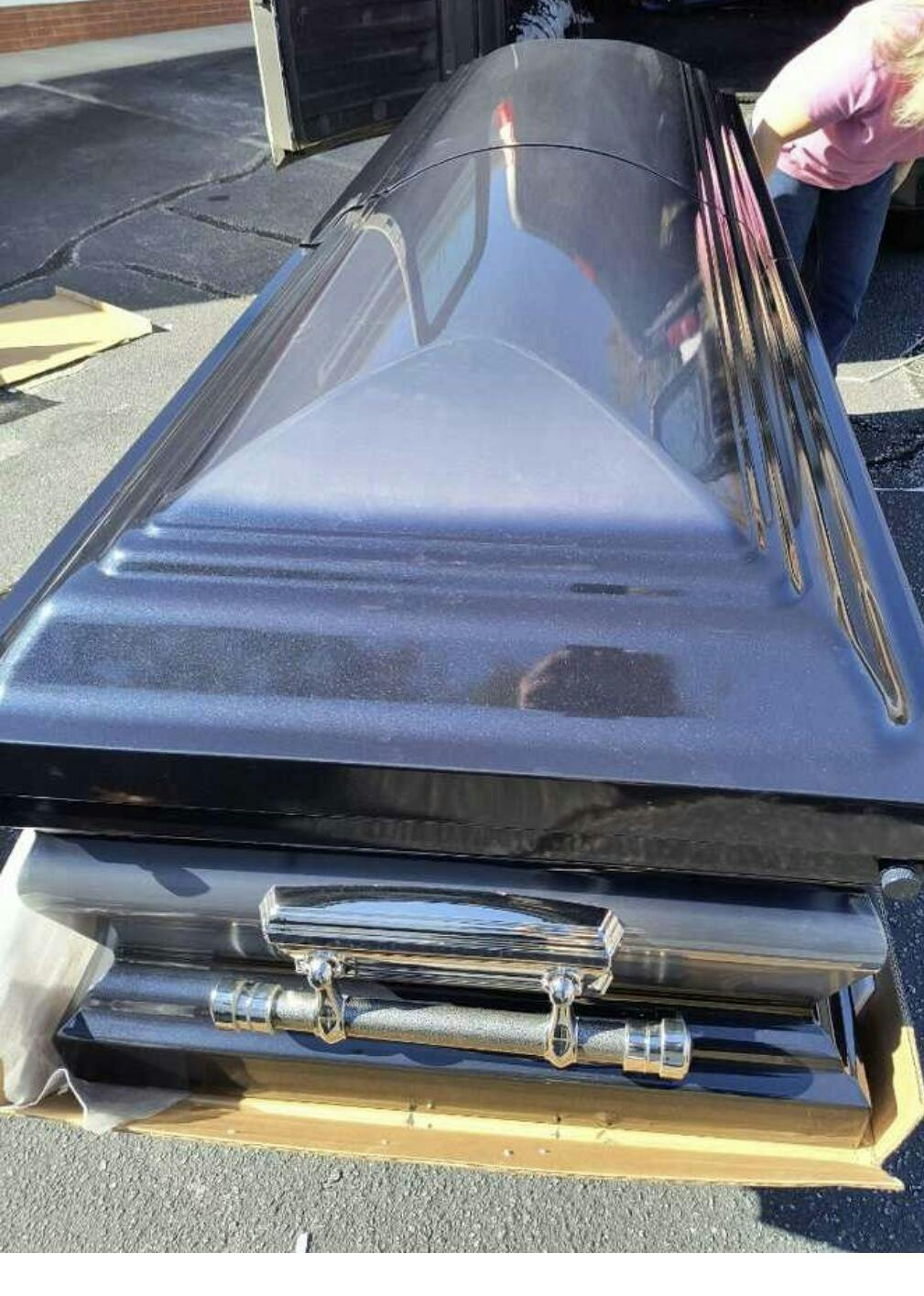
For a traditional funeral and burial, the casket can be one of the largest individual expenses.
The FTC notes that an average casket costs slightly more than $2,000, while some premium mahogany, bronze, and copper caskets may cost significantly more.
Families do not have to purchase a casket from the funeral home.
You can compare options from:
- Funeral homes
- Online casket retailers
- Independent casket stores
- Other third-party sellers
Learn more:
https://www.casketemporium.com/funeral-casket-cost-guide-2026
Step 6: Consider Buying Your Casket Online
One of the biggest opportunities to control funeral expenses is comparing casket prices online.
Buying a casket online allows families to:
- Compare prices from home
- Browse more styles
- Compare materials
- Review specifications
- Choose the features they actually want
- Have the casket delivered directly to the funeral home
Federal rules protect this choice.
A funeral home covered by the FTC Funeral Rule must accept a casket you purchased elsewhere and cannot charge you an additional fee simply because you supplied your own casket.
Learn more:
https://www.casketemporium.com/buying-casket-online-vs-funeral-home
Official FTC guidance:
https://consumer.ftc.gov/articles/shopping-funeral-services-phone-or-online
Step 7: Understand Your Rights When Buying an Outside Casket
Some families hesitate to buy a casket online because they worry the funeral home will refuse it.
Federal consumer protections address this.
Under the FTC Funeral Rule, covered funeral homes cannot:
- Require you to purchase their casket
- Refuse your outside casket simply because you purchased it elsewhere
- Charge an additional fee solely because you supplied your own casket
Knowing this can make comparison shopping easier.
Read our guide:
https://www.casketemporium.com/ftc-funeral-rule-outside-caskets
Step 8: Choose the Casket Material Carefully
Casket prices can vary considerably depending on materials and features.
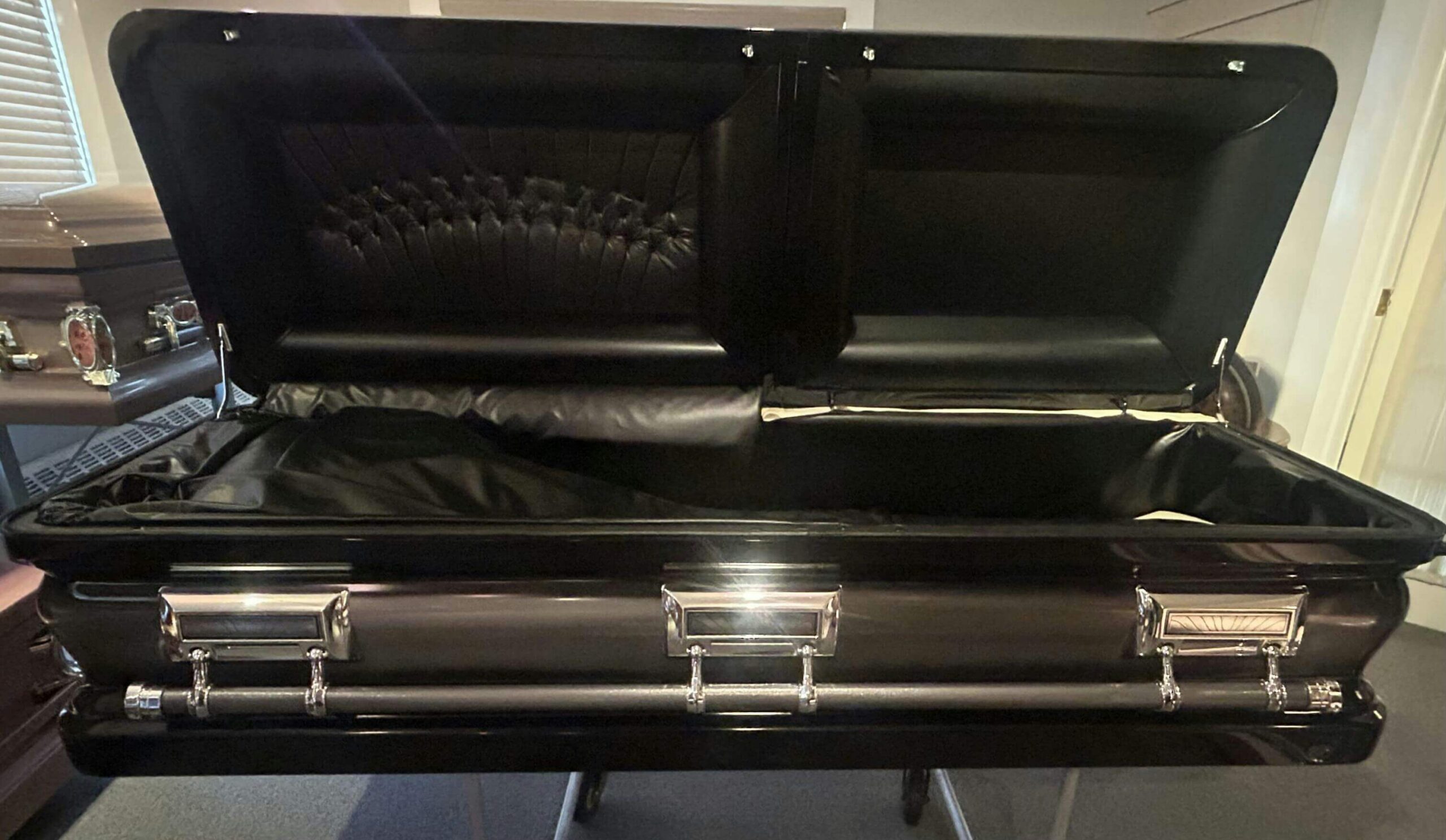
20 Gauge Steel Caskets
Often one of the more affordable metal options.
They can provide:
- Attractive finishes
- Multiple colors
- Traditional styling
- Good overall value
18 Gauge Steel Caskets
Made from thicker steel than 20 gauge models and often positioned as a premium option.
Compare them here:
https://www.casketemporium.com/18-gauge-vs-20-gauge-caskets
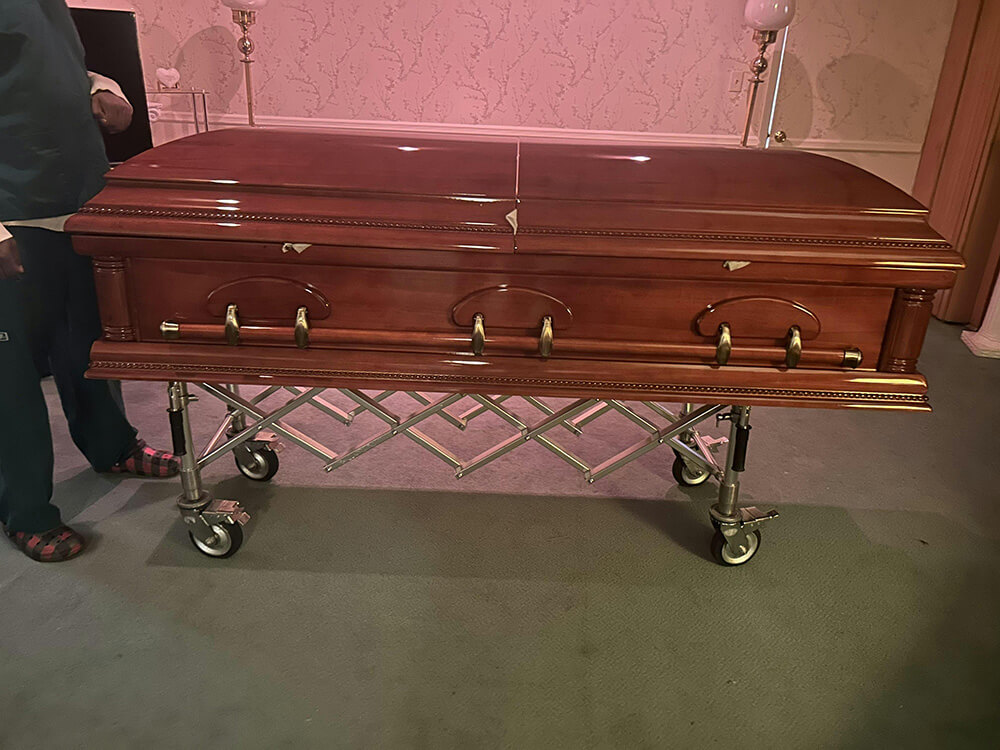
Wood Caskets
Wood options may include:
- Pine
- Poplar
- Oak
- Cherry
- Walnut
- Mahogany
Prices can vary significantly depending on the species and craftsmanship.
Learn more:
https://www.casketemporium.com/steel-vs-wood-caskets
Step 9: Don’t Pay More Based on Preservation Claims
Families sometimes assume that a more expensive casket will preserve the deceased indefinitely.
It will not.
The FTC specifically states that no casket, regardless of cost or construction, will preserve a body forever.
Metal caskets described as:
- Gasketed
- Sealed
- Protective
- Sealer
may have features designed to delay water penetration, but they do not stop natural decomposition.
Understanding this can prevent families from spending additional money based on unrealistic preservation expectations.
Read more:
https://www.casketemporium.com/do-sealed-caskets-last-longer
Step 10: Consider a Shorter Viewing
A traditional visitation does not necessarily need to last all day or multiple days.
One way to reduce funeral costs is to consider:
- A one-hour visitation before the service
- A private family viewing
- A same-day viewing and funeral
- No formal public viewing
The FTC specifically identifies limiting viewing time as one potential way families can reduce funeral expenses.
Step 11: Ask Whether Embalming Is Necessary
Embalming is commonly associated with traditional funeral services, especially when a public viewing is planned.
However, embalming is not automatically required for every funeral.
The FTC states that embalming generally is not required when burial or cremation takes place shortly after death, though particular circumstances or state requirements may apply.
If you don’t plan on having a traditional viewing, ask whether embalming is necessary for your arrangements.
That single question may save hundreds of dollars.
Step 12: Compare Burial and Cremation Options
Different disposition choices have different costs.
Options may include:
Traditional Burial
May involve:
- Casket
- Cemetery plot
- Grave opening and closing
- Grave liner or vault
- Headstone
- Funeral services
Immediate Burial
Usually involves fewer services than a traditional funeral.
Cremation
May eliminate some cemetery and casket expenses depending on the arrangements.
Direct Cremation
Usually involves cremation without a formal viewing or funeral ceremony beforehand and can be among the least expensive disposition options.
There is no single correct choice. Families should select the arrangement that matches their beliefs, traditions, and budget.
Step 13: Understand Cremation Container Rules
A traditional casket is not required for direct cremation.
According to the FTC, funeral providers offering direct cremation must make an alternative container available.
These containers may be made from materials such as:
- Unfinished wood
- Pressboard
- Cardboard
- Other non-metal materials
Families should not be told that state or local law requires a traditional casket for direct cremation because the FTC states that no state or local law requires one.
Step 14: Ask Whether a Burial Vault Is Required
Many cemeteries require an outer burial container, but this is usually a cemetery requirement, not a state law requirement.
The FTC says state laws do not require burial vaults or grave liners.
Ask the cemetery directly:
- Is an outer burial container required?
- Will a basic grave liner satisfy the requirement?
- Can I purchase it from another company?
- What is the least expensive acceptable option?
A grave liner may cost less than a premium burial vault.
Step 15: Save Money on Funeral Flowers
Flowers can become expensive quickly.
Consider:
- One primary casket spray
- Smaller family arrangements
- Flowers purchased directly from a florist
- Seasonal flowers
- Plants that family members can take home
- Asking friends to make donations instead of sending flowers
There is nothing wrong with keeping floral arrangements simple.
Step 16: Consider a Digital Obituary
Traditional newspaper obituary fees can vary significantly.
Families may instead use:
- Funeral home website
- Memorial website
- Community groups
- Church websites
You can still publish a shorter newspaper notice while directing readers to a complete online memorial.
Step 17: Create Your Own Funeral Programs
Funeral programs and memorial cards don’t always need to be professionally designed.
Families can create meaningful programs containing:
- Photograph
- Name
- Birth and death dates
- Order of service
- Favorite poem
- Scripture
- Family acknowledgments
- Obituary
They can then be printed locally or online.
Step 18: Use a Family Vehicle Instead of Multiple Limousines
Ask whether your family actually needs several funeral limousines.
Some families choose:
- Personal vehicles
- One family limousine
- Carpooling
- Rideshare for some attendees
Transportation costs can add up quickly.
Step 19: Hold the Reception at Home, Church, or Community Hall
A post-funeral reception doesn’t need to take place at an expensive restaurant or banquet facility.
Consider:
- Family home
- Church hall
- Community center
- VFW or veterans hall
- Local social club
Friends and relatives may also volunteer food and refreshments.
Step 20: Look Into Veteran Burial Benefits
If your loved one served in the U.S. military, your family may qualify for burial and memorial benefits through the Department of Veterans Affairs.
Possible benefits may include:
- Burial in a national cemetery
- Government grave marker
- Burial flag
- Presidential Memorial Certificate
- Certain burial allowances depending on eligibility
Official Veterans Affairs information:
https://www.va.gov/burials-memorials/
You can also explore veteran casket options here:
https://www.casketemporium.com/veteran-caskets-guide
Step 21: Consider Religious and Cultural Priorities
Saving money doesn’t mean abandoning traditions.
Decide which elements matter most to your family.
For example:
- Church service
- Religious casket
- Clergy participation
- Traditional viewing
- Specific prayers
- Burial customs
Spend on the traditions that have meaning rather than paying for optional items simply because they are commonly included.
Learn more:
https://www.casketemporium.com/religious-caskets-guide
Step 22: Don’t Be Afraid to Say No
Grief can make financial decisions difficult.
Remember:
A more expensive funeral does not mean you loved someone more.
It’s okay to say:
- “We don’t need that.”
- “What is the less expensive option?”
- “Can we buy this separately?”
- “Is this legally required?”
- “Can you show me the itemized price?”
- “We’d like some time to compare prices.”
These are reasonable questions.
Step 23: Ask for Everything in Writing
Before agreeing to funeral arrangements, review the complete price.
The FTC Funeral Rule requires the funeral provider to provide an itemized statement showing the goods and services selected and their cost.
Review it carefully.
Look for:
- Funeral home charges
- Casket
- Transportation
- Embalming
- Viewing
- Ceremony
- Cemetery fees
- Cash advance items
- Additional fees
If you don’t understand something, ask.
Example of a Budget-Conscious Funeral Plan
A family trying to control expenses might choose:
Funeral Home
A basic service package with only needed services.
Casket
A quality steel or wood casket purchased online after comparing prices.
Viewing
One hour before the funeral.
Funeral
Church or funeral home ceremony.
Transportation
One hearse with family using personal vehicles.
Flowers
One primary arrangement.
Obituary
Online memorial plus a shorter newspaper notice.
Reception
Church or family home.
The result can still be a beautiful, traditional, and meaningful funeral.
Where Should You Spend Your Funeral Budget?
If your budget is limited, focus spending on what matters emotionally to your family.
That might include:
- A beautiful casket
- A meaningful church service
- Family gathering
- Music
- Flowers
- A personalized memorial
Cut expenses from items that don’t add meaningful value for your family.
Why Buying a Casket Online Can Be Part of a Budget Funeral
For families planning a traditional burial, comparison-shopping for the casket can make a substantial difference.
At Casket Emporium, families can compare:
- 18 gauge steel caskets
- 20 gauge steel caskets
- Wood caskets
- Oversized caskets
- Full couch caskets
- Veteran caskets
- Religious caskets
- Specialty caskets
Online shopping also gives families more opportunity to research prices before making a decision.
Read:
https://www.casketemporium.com/why-buy-direct-from-casket-emporium
Frequently Asked Questions About Planning an Affordable Funeral
What is the cheapest way to plan a funeral?
Direct cremation or immediate burial may cost less than a traditional full-service funeral because they involve fewer services. Costs and personal preferences vary, so compare itemized options from multiple providers.
How can I reduce funeral costs?
Compare funeral homes, request itemized pricing, avoid unnecessary services, compare casket prices, shorten the visitation, and consider simpler transportation, flowers, and receptions.
Do I have to buy the funeral home’s casket?
No. Under the FTC Funeral Rule, you may purchase a casket elsewhere and have it delivered to the funeral home.
Can the funeral home charge me for bringing my own casket?
A funeral home covered by the Funeral Rule cannot charge an additional fee simply because you purchased your casket from another retailer.
Do I need the most expensive casket?
No. Price does not determine how meaningful the funeral is. Choose the construction, style, and price that fits your family’s preferences.
Is embalming always required?
No. The FTC says embalming generally isn’t required when burial or cremation occurs shortly after death, though some circumstances may make it necessary.
Is a burial vault legally required?
State laws generally do not require burial vaults or grave liners, although individual cemeteries often require an outer burial container.
Can I plan a beautiful funeral on a budget?
Absolutely. A meaningful funeral comes from honoring the person’s life—not from how much money is spent.
Affordable Funeral Planning Checklist
Before agreeing to anything:
-
Set your maximum funeral budget.
-
Compare at least two funeral providers when possible.
-
Ask for the General Price List.
-
Request itemized prices.
-
Ask what is legally required.
-
Ask which services are optional.
-
Compare casket prices.
-
Consider purchasing a casket online.
-
Confirm casket delivery timing.
-
Determine whether embalming is necessary.
-
Ask whether a grave liner or vault is required.
-
Compare burial and cremation costs.
-
Reduce viewing time if appropriate.
-
Keep flowers simple.
-
Compare obituary options.
-
Limit unnecessary transportation.
-
Review veteran benefits when applicable.
-
Review the final written statement before paying.
Final Thoughts: A Meaningful Funeral Doesn’t Have to Be Expensive
Planning a funeral on a budget isn’t about cutting corners on dignity.
It’s about understanding your options and spending money on what truly matters to your family.
Compare funeral providers. Ask for written prices. Understand which goods and services are optional. Know your rights. And don’t assume the most expensive casket, service, or package is automatically the best choice.
At Casket Emporium, we’re committed to helping families find quality funeral caskets at competitive prices while providing clear information and dependable service.
Whether you need a steel casket, wood casket, oversized casket, full couch casket, veteran casket, religious casket, or specialty funeral casket, our goal is to help your family honor your loved one beautifully while staying within your budget.
Visit:
https://www.CasketEmporium.com
to browse our collection or contact us for assistance.